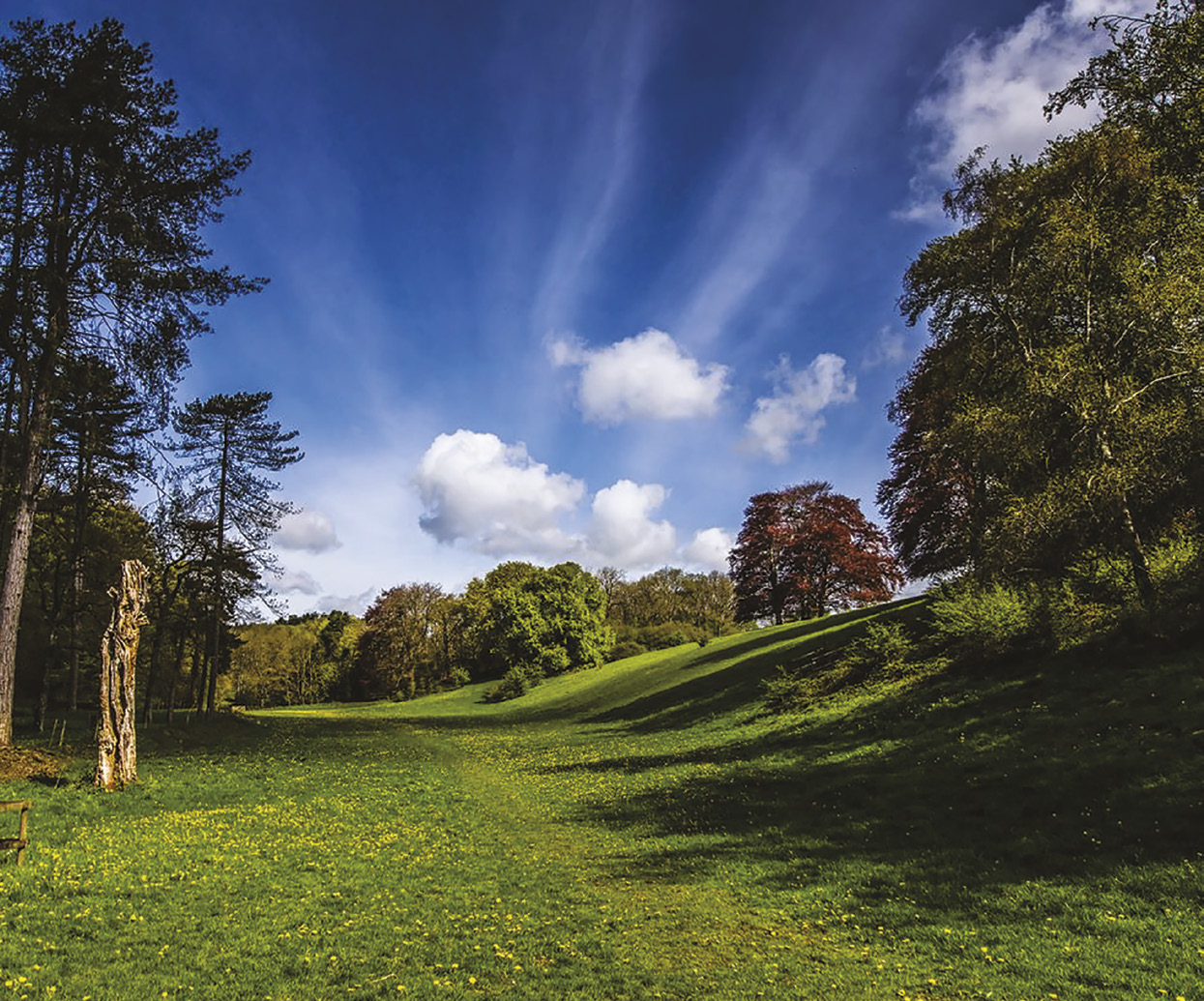
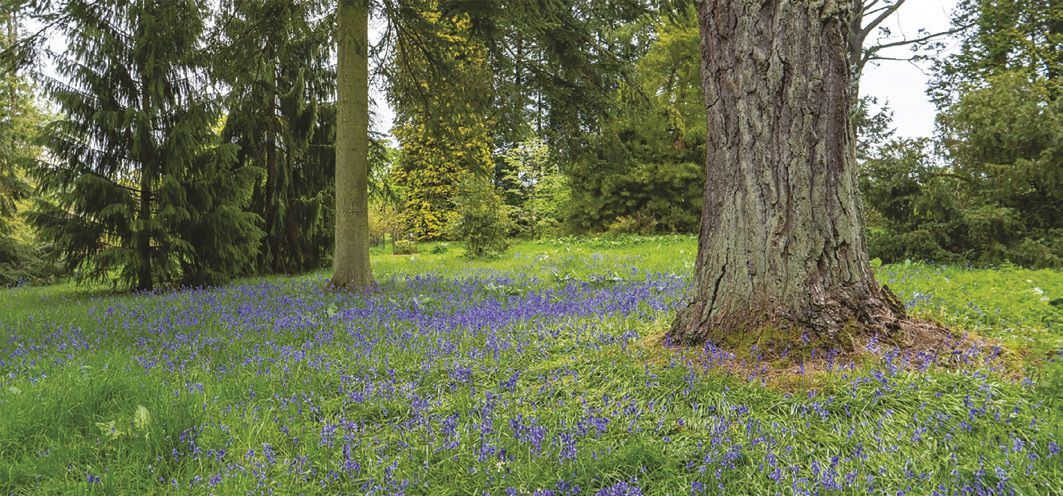

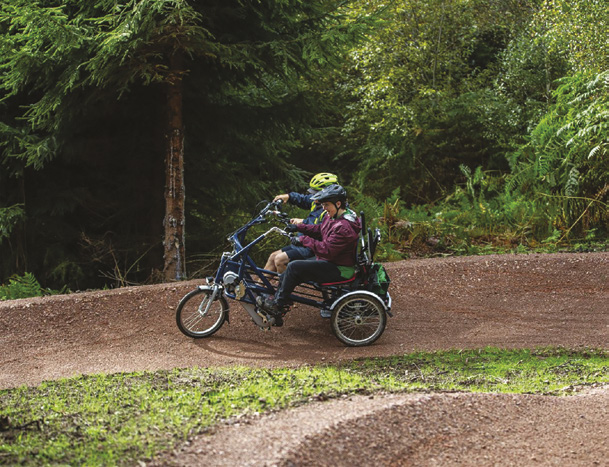


LWD spoke to Forestry England about how it’s working to change that, making the nation’s forests more inclusive, easier to navigate and better equipped for disabled visitors and their families. With more than 3,000 kilometres of recreation trails nationwide, accessibility is increasingly built into how forests are planned, upgraded and managed.
In the last two years alone, Forestry England has introduced new accessible walking trails, inclusive cycling routes, Changing Places toiletfacilities and all-terrain mobility scooters at sites across the country.
Whether you want to enjoy a gentle forest stroll, spend time with family in nature, try cycling with an adaptive bike, or simply sit and take in the sights and sounds of the woods, there are now more ways than ever to enjoy the country’s forests. With most people in England living within an hour’s drive of a Forestry England site, an accessible outdoor experience may be closer than you think.
Inclusive cycling
Cycling can offer freedom, confidence and a sense of adventure. Forestry England is committed to making forest cycling accessible to more people, including disabled riders and those using adaptive cycles.
In the Forest of Dean, Old Bob’s Trail is leading the way. This 2kilometre green graded cycling route has been specifically designed to welcome riders using adaptive bikes, while remaining suitable for beginners, families, balance bikes and trailers.
The trail has been carefully planned to remove unnecessary barriers, creating a flowing experience over firm surfaces and gentle gradients. Three separate skills areas allow riders to build confidence at their own pace, with features such as gentle banked corners, manageable rock gardens and rolling terrain.
“We wanted to create something truly inclusive. Old Bob’s Trail is as exciting as it is accessible. Whether you’re using an adaptive cycle or any other bike, the trail offers real mountain biking experiences for all abilities,” said Dan Weston, Recreation Manager for the Forest of Dean.
It’s an approach that shows accessibility doesn’t mean compromise. It means designing experiences that work for more people.
For some visitors, walking long distances or navigating uneven ground can be a barrier.
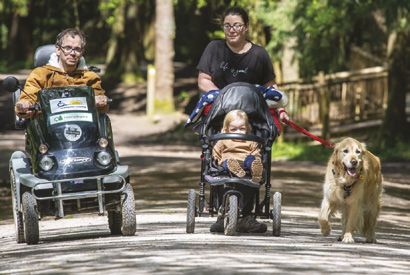
To help more people explore independently, Forestry England has expanded its all-terrain mobility scooter offer across the nation’s forests.
There are now more than 20 scooters available nationally, with recent investment adding nine new scooters across five forestcentres. Designed specifically for outdoor use, they can handle forest tracks, moderate slopes and variable weather, opening up miles of trails that might otherwise be inaccessible.
The scooters are straightforward to use, and full training and guidance are provided before hire. Many first-time users say this support helps them feel confident and relaxed before heading out, knowing they can enjoy the forest at their own pace.
To support planning, Forestry England’s website includes a searchable map showing which sites offer mobility scooter hire, alongside videos explaining what to expect from the experience.
Play Spaces
Inclusive play is a key focus across Forestry England sites. New and refurbished play areas are designed so children of all abilities can play together, in ways that suit their individual needs.
Using natural materials alongside innovative equipment, these spaces offer a mix of sensory, physical and imaginative play. Sound, colour and texture are carefully considered, and interactive features are positioned at different heights so more children can engage independently.
Calmer areas, such as quiet corners and cosy dens, sit alongside climbing, swinging and more active play equipment. Smooth, wheelchair friendly surfaces create accessible routes throughout the play space, supporting children who use mobility aids, families with buggies, and those who need clear, easy routes.
Enjoy the View
Accessibility is not only about movement, it’s also about being able to stop and rest.
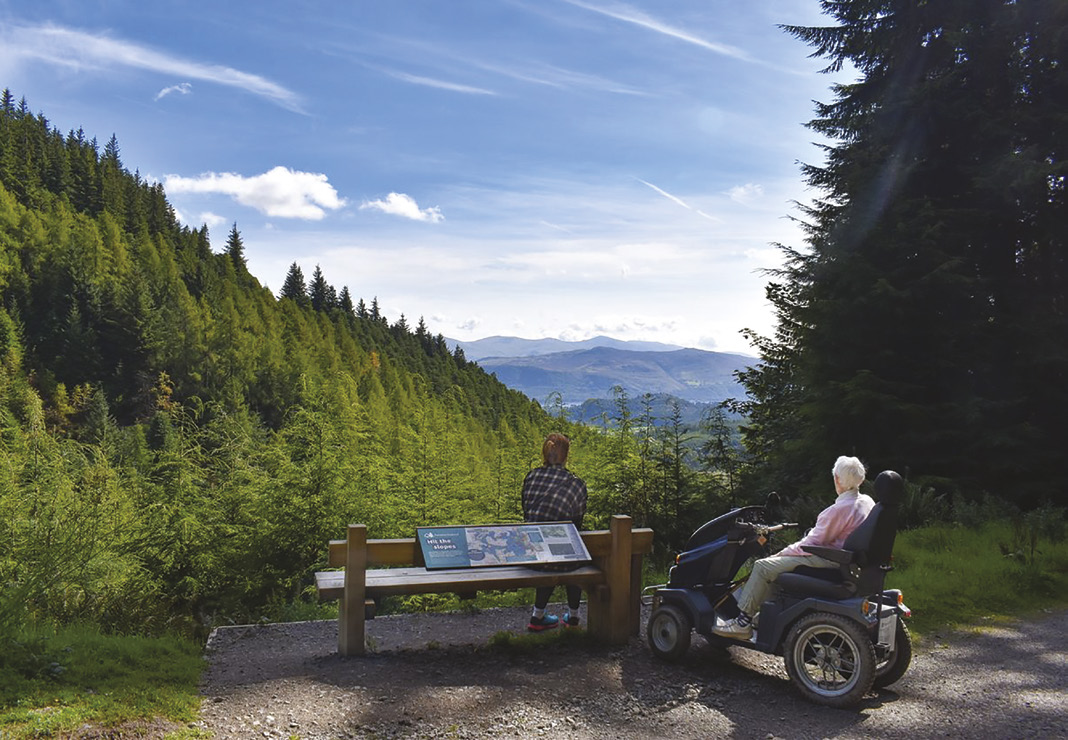
Across Forestry England sites, accessible benches and perch seating are becoming more common along trails and viewing points.
Benches are often fitted with armrests and supportive backs, with seat heights designed to make sitting down and standing up easier.
Perches offer an alternative for people who find sitting difficult but still need regular rest stops.
For many disabled visitors, knowing that places to rest are available makes planning a visit easier and helps build confidence to stay longer and enjoy more of the forest.
Changing Places
Access to appropriate toilets can define how long a day out lasts. Forestry England is continuing to expand its network of Changing Places toilets across its forests, creating opportunities for longer, more relaxed visits.
Changing Places toilets provide space, equipment and dignity — including hoists, adult sized changing benches and room for carers to offer support safely.
“I love adventures and coming to the woods is an adventure… With Changing Places, we don’t have to go home early. We can meet our friends with disabilities in the forest as they can also use the space.” said a regular disabled visitor.
Planning with Confidence
Good accessibility information is essential.
Forestry England’s 'Know before you go' guidance offers clear, site-specific details to help disabled visitors plan confidently before travelling.
Information includes trail surfaces and gradients, distances, accessible facilities, parking details, mobility scooter availability and downloadable maps. By sharing this information upfront, visitors can decide what will work for them — reducing uncertainty and helping ensure an enjoyable, well-planned visit.
The nation’s forests belong to everyone.
As accessibility continues to improve, more disabled people can enjoy outdoor adventures, quiet moments and shared experiences in nature - on their own terms. To find out more visit https://www.forestryengland.uk/
“ There is no Wi-Fi in the forest, but I promise you will find a better connection.
Ralph Smart